A Sad Tale of Writer and Clankers

There is a point in anyone’s descent into madness where they could turn back.

Having started the sound track for the world’s second longest book (okay, I’m not sure, but I have a feeling) we can all agree I’ve gone too far and have now passed the point of no return. I’m so sorry.

However, you can’t have me committed on the basis of “I Got to Bake” is a prima facie sign of insanity. I mean, Skip DOES like to bake. Yes, he’s my character. You say that like I have any control over him. As you know, it’s complicated.

And no, I’m not going scene by scene. Otherwise I’ll still be doing this next Christmas.

And yes, there will be lyrics videos, but that’s fiddly work, and I’m trying to do the final edit on Witch’s Daughter. So, possess your soul in patience. The lyrics are in the text on youtube.

Other People’s Children

I don’t know who this will surprise — precisely — but I’m a bleeding heart libertarian. Always was. My worst acts of hooliganism and coming home with my umbrella broken — before the weaponized umbrella — after raining blows on some unrighteous who richly deserved it were in protection and support of the smaller and the weak. Mostly human smaller and weak people. Not always human, since the other huge hole in my head is that I have trouble distinguishing between pets and people. Heck, sometimes between pests and people.

I was the sort of little girl forever bringing home lost kittens who needed to be bottle nursed, critters who’d got hit by cars, little birds who’d fallen from nests. My rate of success at raising/getting all those out of danger, and either freed or found new homes was higher than anyone had the right to expect. (Weirdly it never even occurred to me to want to be a veterinarian. Mostly I think because Portugal at the time was veyr poor so most of what people were willing to pay veterinarians for was cows and horses. And that was right outside my personal experience in treating.)

Of course, you see, every such case involved diplomacy to make sure mom wasn’t going to prematurely “free” the animal or put it out of her misery, or– (Mostly for baby birds.)

Mom — weirdly considering she married dad who is worse than I am and will make a pet of absolutely anything and was the son of a woman who had even more issues with bleeding heart than either of us — had a complicated view of the animal kingdom. It was either food, or a nuisance. Nothing in between.

IF you could get an animal under her radar, to where she considered it part of the tribe, she would look after it and protect it — our evil (not to us!) Siamese, Calimero, whom dad dragged home tiny and in need of hand nursing — but you couldn’t ever say she was attached to them.

I think she felt a little weirded out by the family’s obsession with animals, and tried to disguise her own discomfort (and here I want to point out left to our devices dad and I — not to mention brother — absolutely would have turned the house into the weirdest animal shelter that ever lived, with everything from lizards to goats.) with animals in the house, she fell back into something so at odds with her political views as to be nonsense. “I don’t condone spending money and time on animals, when there are people’s children who are starving.”

This was bizarre and mind boggling, since she was the one who hard-slapped sense into her — bleeding heart, remember? — young daughter about “there are people you can’t help, and you should be very careful about giving money to people you don’t know. You might do more harm than good” when my church group fundraised for a family in distress, only to have the parents spend it on wine, and the kids never see so much as a toothpick from it. At the same time she was generous both in time — she was always there to help a young widow or people who were ill — and expense: she sewed complete wardrobes for the kids from the slums who attended my school occasionally for a few months (half naked, or in completely inappropriate to the weather clothes) and discreetly funded school trips for my classmates who couldn’t afford it. And she paid for renovations for people whose houses were falling apart.

However she was very aware that “there will be people’s children starving, always” because the problem is not lack of help, it’s parents who will do that no matter what.

I was thinking about that yesterday, as we were giving our very old cat — Havey — his meds. And I thought, we’re spending a bunch of money to keep him pain free in his old age (he’s basically on hospice level pain killers) and we go through a lot of trouble to do subcutaneous hydration twice a week. And–

And I thought “Our cats are treated better than a lot of kids in the third world.” I didn’t think it with guilt understand — there’s nothing I can do for those kids. Oh, we sponsor a couple of them through a thoroughly vetted association and — de minimis in harm — hope it’s not the sort of thing that stifles local production and such. BUT– but with a forlorn wish that I could help THEM too.

Look, I behave the way I do not because of religious precept (that too, of course, but honestly I was functionally a-religious for much of my life, and anyway, I’m still me. I’m not going to do this or that because someone says so. even if the someone is Him. Well, different now, and more likely to because I have a relationship with Him. And I don’t do obedience, but I do “my friend would like this.”) but because I want the world to be the sort of place where people do things like protect the weak, help the helpless, bring light into the darkness, give hope to the hopeless.

I learned early on and through various experiences that the world isn’t always that sort of place: that it more resembles the Noir hell holes of hard bitten fiction all too many times. That there are always bastards looking to put the boot in; people you didn’t even realize you had more than a passing acquaintance with who inexplicably hate you and go out of their way to f*ck you over; and a horde of weaklings and sniveling cowards hoping to kick someone else who is down.

And yet…. And yet there are people like my grandmother, and my dad, and yes Mom (though Mom’s upbringing made her more cautious and hard headed) who not only don’t kick you when you’re down, but will try to help. And often will try to help while preserving your dignity as a human being.

Take our mailman back in the village. Everyone knew he drank. A lot. But normally not on the job. And then one day he passed out in front of our house, hit his head. There was a lot of blood.

Mom brought him inside, called the doctor and got someone else to do the rest of his route, so he wouldn’t be fired.

Since he was barely an acquaintance — as far as possible in a village from a friend — and since I was 10, and starting to get a feeling people talked, I got my nose out of joint. Afterwards, after his neighbors had come to take him home, I complained to mom that people would talk about how she’d gone out of her way to help him, even though he was nothing to us. Why go out of her way for a man who was a drunkard and the village joke.

That was when she told me that when she and dad got married, the man and his wife had been mom and dad’s friends. And then she died of something, very fast (probably cancer. The village was ashamed of cancer. Not sure why) and the same year their only son caught some illness, and it progressed to meningitis so he became mentally impaired.

The man drank because even if he ever wanted to marry again no one was willing to take on a — then — teen who had to be looked after like a toddler. But note, he didn’t institutionalize his son. He just looked after him as best he could, did his job, paid someone to look after him during the day. It’s just he couldn’t crawl back out of the bottle he’d crawled into that year. “We all have weaknesses.”

And that was a reality I couldn’t deny. That my family — and other people in the village, here and there, and other people in the wider world too — weren’t bastards out for what they could get and using people as things.

At some point, before I was a teen, I decided I wanted to be the sort of person who did the things that the world was short on: Mercy and kindness, and helping others.

Realizing that I can’t “save every cat” took longer. Sometimes Dan has to remind me of this.

But I do what I can, when I can. If I can help it without making the other person obligated.

Mom’s dichotomy is wrong. There isn’t a single child, in a third world country, whose life will be made better if I mistreat my cats or throw them out into the cold world to die. Same with animals that aren’t mine. Right now there’s a heated house on our porch for the cats in this blustery weather, and we put out food. There’s a family of them, mom and two grown sons, and the mom is about to pop again. This doesn’t impede us trying to help kids, too, both nearby and across the world.

In the same way, this year, because we could, we sent gifts to kids of friends. They don’t need it, but it’s fun stuff their parents might not think of, and it will make the world a place where there’s unexpected joy. This also doesn’t take away from any kids in the third world experiencing privation.

Because most of the kids in the world being mistreated are either at the mercy of evil adults who would not take kindly or allow our interference, OR caught in situations where their entire country and culture is so screwed up their parents wouldn’t even UNDERSTAND how to fix it, let alone being able to. And much less us strangers.

And when trying to help those situations it’s very important to make sure the charity you’re dealing with is actually a charity, not you know a “guns to South America” band of hopeful Marxists, or — like the heifer project — just providing a few meat feasts to a few villages every once in a while (because the requirement to share wealth doesn’t allow people to keep animals for livestock and let their wealth grow.)

Even when helping abroad, it’s best to go through people who KNOW the regions, the shortcomings of the culture, and do what they can around the edges. Because, you know, it’s helpful to know the money won’t go for drink or worse.

This isn’t always possible. So– I tend to favor charities that make it possible for women to earn a living. Sewing machines and the like. Yes, I do realize some of those will be sold and the money wasted. And it’s not that I think women are special and deserve more help.

It’s more that in the cultures where this stuff is given, women often desperately need a way to provide for themselves and their children. And studies show family wealth rises if the woman can bring in some money from home without “shaming” her husband. So the money goes there, when I have it for strangers. Usually my charity is less official. And often less monetary: helping a newby with a book. Talking someone’s kid through a short story project. Promoting a young (or not so young) writer who deserves it. Stuff like that.

BUT none of it — none of it — is hurt by my looking after my idiot cats or helping my children, or loving and helping my friends.

Love and care and helping — in the measure you can. Please, never hurt yourselves — is not finite. Oh, money is, but money isn’t the only help there.

Yes, the world is a hard, unforgiving place. And that’s why it falls on us to bring love, charity, care into it.

It’s up to us to bring light. Not to wait for the government or someone else to come and do it, but to do it ourselves.

And to do it in the measure that it’s possible — sometimes it’s a smile and a kind word to a sad looking stranger — and to those closest to us and that we know best.

So, this Christmas? Even if you don’t have the money, and even if the critters don’t know it’s Christmas (Or Hanukah) try to bring a little light into the world, in a small way. Even if it’s just feeding a stray cat, or sitting on the sofa for an hour longer than you’d like, and petting an elderly bag of bones and fur. Or bake cookies for your family if such is a thing. Or read someone’s first story and try to help (or reassure them it’s good.) Or talk a little longer to the old lady in the grocery store, whose family lives far away. Or whatever you can do, in the measure you can nearby or for people and animals you know.

The world is indeed cold and dark. Particularly in winter. And other people’s children, somewhere, will always be in danger pain and privation.

Which is why you should bring light and love in the measure you can, in your interactions. Because the light breaks up the darkness. And makes this a world fit for humans.

You Get More of What You Pay For

Today I ran across an idiot on Twitter talking about how Elon Musk could eliminate homelessness by giving his money to all the homeless.

And then the movie Dan had on was about how this woman wanted to make enough money to eliminate homelessness in LA.

Guys? Seriously?

How many millions do cities like LA and San Francisco plow into homelessness? How much money have cities like Denver spent on the homeless.

What have they got for it? That’s right. more homelessness. Which is absolutely logic.

You get more of what you pay for.

But if I must explain the mechanism, it is this: when you create “homeless services”, like free health care, and shelter and clothing (well, Denver was doing all of that at one point) you will attract more homeless.

If on top of that their behavior is never curbed, and they can do whatever they want from attacking people to pooping on the sidewalk, it makes the lifestyle seem incredibly attractive. After all, someone takes care of all your needs and you can do whatever you want. And you’re a perpetual victim.

Of course the ACTUAL lifestyle sucks. Like any social ape without restrictions or judgement form the community, if the people hadn’t already become homeless because of drug use or insanity, they’re going to start using drugs and going insane. Because that’s what happens when your life has no purpose but gratifying your own desires of the moment.

And yes, much as I hate to tell you this, most homeless — not those people considered homeless because they’re couch surfing or whatever — but the real homeless, camping on the streets aren’t there because they had a bad month, or lost a job.

Yeah, there have been times when it looked like it was looming for us. But when it’s that type of thing? People have family and friends and failing all that church organizations that can find temporary shelter till they’re “back on their feet.”

The justifiably homeless are people like the mentally ill, because throwing the mentally ill on the streets was NEVER a solution. Now, yes, there will be abuses with any mental health system, which is why it needs strong safeguards. But washing our hands of the whole thing and effectively having no shelter or protection for these people is not a solution.

But there are a lot more that are “merely” drug addicted, because … well, because it’s easy. There isn’t even a terrible amount of social disapprobation for this. They are treated as victims of a terrible disease who have no self-control. And money is shoveled to make their lives more comfortable.

At this point homelessness is an industry costing the country billions of dollars most of which of course don’t go to the homeless, but to various NGOs and “Charity” organization and the politicians involved in them.

I suspect part of the reason that politicians tolerate — encourage — the homeless to camp on sidewalks and poop on sidewalks and throw things at people is exactly that. So that they have a picture of human misery to extort more money from tax payers and beat tax payers over the head with guilt if they want the whole circus to stop.

But the problem is exactly that: the human misery. The wasted lives of people who could have been okay with timely intervention, with a little mental health help, with JUST not being allowed to do as they please on the street, and maybe found the strength to clean up, to beat back against addiction.

After all, I understand from my friends who’ve gone through it, you have to hit bottom before you can recover: be it from addiction or bad habit.

If we never let them hit bottom, they just fall endlessly.

Could all of them be saved? No. That is extremely unlikely. But surely even those who would be lost for addictions deserve better than to be treated as a freak show to intimidate tax payers into giving away more money that the politicians can use for graft and corruption?

There is about the whole homelessness drive, the certainty that by throwing more and more money at it it will disappear, even as it grows something almost demonic: there is a passionate drive to make things as absolutely horrible as possible.

For the homeless and frankly for every urban dweller.

And I’m sick of it.

There And Back Again

No, I haven’t been home recently. And at this point, I probably can’t go home.

To explain: I’m the sort of person who gets attached to places. There are people who do and people who don’t. I think it’s a factor of temperament? Like cats. There are cats who love places and cats who love people.

We thought Greebo was a place cat, because he was outdoors for 13 years and the king of the neighborhood. Sure, he came running when we so much as cracked the front door to check the mail, but we still thought… And then we moved, and he sat in the middle of the street crying all night, and the neighbors called us to come get him. Turned out he was a people cat.

But there are also people who rent or buy a new place and a few months later a cat shows up and the neighbors say “But they took him/her with them!” Because cats will do hundreds of miles back to their territory if that’s what they’re attached to.

Well, obviously I attach to people. I mean, husband hasn’t managed to shake me yet, and I get very depressed when I haven’t seen either one of the boys in over three months, so we arrange visits. BUT I’m also a cat with a territory.

My first territory was the village, of course. And I want to point out I attach weirdly. I missed the silhouette of the trees at the back of grandmother’s yard. I missed the quality of the light. The habitual sounds. I missed them more than people. When I went away, I ached for the familiar places and sounds.

But I had to leave. Many reasons, but to stay was to die internally. So I left. And for the first three or four years we went back every summer, and everything was the same. I could go have tea with grandma and pet the cats and–

When did it change? First I changed. I had to acculturate. And having acculturated, going back everything felt wrong, like clothes that scratch. And then…. and then the place changed. When we went back — to see my parents — I still would sometimes catch a familiar glimpse within the crowd. Now the people I knew are dead or old or have forgotten me. And the place is completely different. It got eaten by the city of Porto. It’s all high rises and asphalt. I can quite literally get lost within blocks of my parents’ house.

Sometimes, in the middle of it, I catch a glimpse of an old — now rusted — gate that used to be a farm gate, and I want to hug it to my heart as the memory of things gone by. I haven’t gone by or driven by grandma’s house in 10 years. I understand the formal parlor and all the space to the stairs are now a garage with a garage door. And half the backyard is under a highway. The place where we buried pets, the place grandma grew roses, the old shed where mama cat had kittens… And the neighbor’s field, where Dad and I would walk through — having jumped the back wall, like louts — on our way to the woods and our Saturday walks and adventures. All under very fast continuous traffic.

The place I loved is literally not there anymore. The geographical coordinates are, but nothing remains of the things I loved, the things that I was attached to. My nephews love it, but it’s their place, not mine. As far as me, I’m from no place that can be found on the Earth anymore.

And then…

You know, there’s places you live in that you just don’t attach to. They’re fine to live in. You might even love the house, or…. but even if you are a cat with a territory, there are places that feel like hotel rooms. You put your things in drawers, and you make yourself comfortable, but you know you’ll leave again soon. It’s not yours, just a place to stay.

Charlotte was like that to me. And Columbia South Carolina even more so.

But then we moved to Colorado Springs downtown, and I felt I’d come home. I still miss that walk from the corner of Cache La Poudre and Weber, down Tejon or Cascade (up Nevada.) to the library. I knew every shop and every minute detail back in 92-93. That remained, while we lived in Colorado, one of my centers of attachment. Later on, when we moved a couple of blocks up on Weber, my son and I would do that walk every morning, early, before school and before I settled down to work.

It became untennable and frankly dangerous as more and more feral homeless moved in, but we still did it until we moved away.

The other centers of my attachment to the area were from frequent visits to Denver: the Natural History Museum, the zoo, City Park, Pete’s Kitchen for late night dinner or– well, we used to go by one the way out of town be it for a conference or a visit to Portugal. Then stop by on the way back in even at two in the morning.

When we lived on the outskirts of Denver and Dan and I were newly empty nesters, we would get up very early on Saturday sometimes and go to the botanic gardens, and walk around and talk plot.

The place we’re living in is fine. There’s nothing wrong with it, and we have friends nearby. But it feels like a hotel room.

And I miss home so much I can taste it. There are days I’m so homesick I put youtube videos of people driving between Colorado Springs and Denver (we did that SO often) on and just watch them and cry. Or — without sound — videos of people walking around Denver. Or just webcams.

Thing is we went back once for five days, to see friends, mostly. Two years ago. And it was… Well, a lot of it IS still there. It hasn’t been that long. Except downtown Colorado Springs is now a weird condo canyon that feels like a mix of California and NYC. So that’s more or less gone.

And Pete’s Kitchen closes at night. CLOSES. Pete’s Kitchen! And all the furniture is now …. well. The cheap plastic tables and chairs in the annex were replaced by some student college bar bs. Most of the clientele are indeed college kids.

I won’t lie, though: I’d still go back if I could. Even with the ridiculous politics, I’d still go back. If I could. Except even two/three days is enough to make my autoimmune rev up to insane. So…. I can’t go back again. (And have wholly failed to persuade Dan to a weekend in Denver because of this. Well, that and flying there.)

So here we are. There might be — who knows — a place I attach to again in the future. The problem is you never know why or how, okay? There is no LOGIC to it. Dan and I drove into Colorado Springs just before Thanksgiving 92, in the middle of a snow storm. But we caught bare glimpses of the streets and the inner voice said “welcome home” for both of us.

Part of why moving away was so strange is that people kept telling us things like “Just go wherever you want. Go some place you want to live.”

I wanted to live where I was. THAT was not the problem.

Now I am the cat who walks alone with Dan and all places are the same to me. And from what I hear of friends back home, it’s more and more not my home anymore, but someone else’s home, with vague resemblances to the place I loved.

You can’t go home again. It’s not there. And you’re not the same person who loved it and fit in there anyway.

All you can do is go on and hope you find a place you fit in again. Is three times in a lifetime too much to ask for?

Oh, that and I can write about that place I loved, back there in time. By the magic of being a writer, I can go back for a few minutes or an hour back in my mind and be comforted.

And I do.

Oh the 2025th noel, the clanckers did sing!

Okay, definitely not Christmas songs, but….

First, When Worlds Collide! got a lyrics video. (Needed, as it’s one of the more wordy ones.)

Second, there’s a lucky 13 song for the sound track. Two more are written, but they’ll come out a little at a time.

And yes, will compile the MP3s of the first 12 and put them somewhere for substack subscribers to download, and then put it somewhere to buy, because who knows, people might want to.

Hard Or Soft?

When our older son was born, between three days in labor and emergency caesarean, on COBRA, we found ourselves eighteen thousand dollars in debt.

Now, this might not seem like an insane amount unless you take into account up to that time the most husband had ever made was 28k a year. AND he was unemployed. (Because he had to quit to look after me through pre-eclampsia) and there were no jobs in town. So we had to move out of town for a — rather terrible — job. And we had to live like we were … well. At one time we sat outside a soup kitchen trying to get the courage to go in. (Look, at the time I wasn’t published. And I was too addled — the pre-eclampsia didn’t clear out completely till I stopped nursing, plus there was severe post partum depression — to get a job, besides the fact we had no one we trusted to watch the infant. So– It was bad. Really bad. I’m jealous of people who can hit upwork of fiver and get SOME work. I participated in a focus group on baby names BECAUSE it paid us $50. This was toilet paper for the month.) To add to the depression, I was sure we’d never pay it off/come back from it.

I won’t lie. our entire time in South Carolina, while Dan worked in job-from-h*ll — 16 to 18 hour days working on origami code while I was home alone with the kid, and no car that ran, even if I were brave enough to drive which I wouldn’t be for 7 years — it was like the noir novel where the character lives in a squalid room, with the plaster falling off the walls, and tries to ring two more tablespoons of soup from the can.

Also we gained tons of weight, and probably materially damaged our health by living mostly on carbs. (Not on purpose. It was mostly rice.) It’s cheap. It was the cheapest we could eat. Rice and bulk frozen vegetables in winter. Go-to-farmer’s-market-just-before-closing-and-buy-at-pennies-on-the-dollar veggies in summer. I’m here to tell you cutting fat and protein did NOT work for us. (For the record, you know someone’s metabolism, you know ONE metabolism. They vary that much.)

Why am I telling you this story?

Well, because at the time — I’d only been naturalized 2? 3? years — all my relatives from Portugal — and friends — were singing the siren song.

“Living there is too hard. They demand you be rich already, or how can you weather things like this? If you lived here, you wouldn’t have paid for that complicated delivery. You should move back.” Mom was working 24/7 to try to find Dan a job there, and I have a friend I haven’t talked to since, because she offered me a job and I turned it down. (She made the decision to cut contact, not me, to be clear.)

They honestly thought I’d lost my mind. All this insane hardship we were going through, and it was all so unnecessary. In Portugal things were so much easier, so much more cushioned. The state picked up health care; we could live with my parents till we were on our feet, and why did we insist on doing it the hard way?

At the time, being very depressed and thinking I’d never spring up, I wondered if I was insane too, in choosing the hard over the soft. (It’s 2025 chilluns. We ain’t doing phrasing anymore. Also, the gentleman who laughed, yes, you in the back, can stay after school to help clean the blackboards.)

I can’t claim any great discernment. And to be honest if we hadn’t had a kid, and it had been some other kind of debt, I might have buckled. BUT–

But I had a strong — STRONG — feeling I didn’t want my son to grow up anywhere else. So we turned down all the help — except dad insisted on sending us $200 a month for two years. THANK YOU DAD. We’d have gone under without it. We were paying mortgage, rent, kid expenses, and still didn’t have insurance because job from hell didn’t offer it.– and soldiered on.

At some point, a year later, Dan snapped, came home late one night (Might have been when they told him he wouldn’t have Christmas off?) and asked me where I’d like to move. Because he’d looked for jobs all over the Carolinas and found nothing, might as well look another state. I said “I always thought when I grew up I’d be a writer and live in Denver.” Yes, I immediately explained when I first got this idea, I was 8 and had no idea where Denver was. But he had decided. So, over the next several months, he’d go by the magazine store once a week and get the Denver papers, and send out a minimum of 10 resumes. The idea being he applied even for entry level jobs in his field and adjacent fields, because once we’d moved we could find another job more easily.

Eventually we found job at a 30% increase, moved to Colorado, paid off the debt within a couple of years… and life got markedly better.

Along the way, we bought houses, fixed and sold (Not flip, because we lived in there for a minimum of five/six years while working on them) and we had another kid and–

We went through some very tight spots, but never that tight again. And I kept trying and got published, and made some money from that, and now the boys are on their own paycheck (younger one still in the rice and veggies phase, but this too shall pass, and help is not mandatory but voluntary on our part) we are okay. Not rich by any means, but okay. Enough for us, and cats and some help when kids need it. Still socking most of the money away because old age and health are expensive together. BUT doing okay. A far cry from those hopeless years.

So…. are we masochists? Was the hard way we chose just punishing ourselves for no reason?

I don’t know. Barring a machine to examine parallel universes, I can’t know. But here’s the thing: The last time I talked to childhood best friend (not same friend as above, but we lost touch. Probably just life. I don’t even know if she’s still alive) she said “Isn’t it weird that of all of us you’re the only one doing exactly what you wanted to do when we were little?”

Weird? I don’t know. I know that year and change from hell, and a child who was our responsibility lit a fire under both of us.

And I can’t tell how it would go otherwise, because — well — there is no way to know. BUT I do know I’m incredibly lazy. Unless a book PUSHES I have a heck of a time finishing it. And this house right now looks like Pompeii after the volcano because I’ve been putting things on every surface rather than actually, you know, organizing and cleaning (I need to work on witch’s daughter today and tomorrow and then the great cleaning and organizing starts. I need to try plaud.ai and see if it works for me.) Given a choice, except for “which country to live” I tend to take the easy way and coast. Because I’m lazy.

BUT of course, there were other reasons to choose the US, like my feeling better here, and already, over there, a creeping whiff of jackboots. (Which like most Latin countries, Portugal flops into regularly. However, the EU already scared the cr*p out of me.)

Still…. would we have fought so hard if we hadn’t come close to hitting bottom? I don’t know. I know we were terrified.

And it’s not like we’re big hairy independent. Obviously we’ve had help along the way (you guys know of one instance, plus my dad. There were also years when my parents sending us a Christmas gift was the only reason we HAD Christmas. Because cars or house had broken down.)

BUT it’s more, we didn’t have that guarantee that if we did nothing and just coasted we’d still be fed, and warm, and with a roof over our heads.

I can tell you that the prospect of hanging in the morning being broke and barely surviving for the rest of our lives lit a fire under us.

There’s also the fact an economy not as encumbered as Europe’s (We can’t claim to be unemcumbered, alas) by social net nonsense is more agile, and better able to provide opportunities for people (even as bad as things have got here, yes. Europe as the stench of decay of something that gave up and crawled in the corner to die.)

So there were more opportunities for us — motivated as we were — to keep going.

My conclusion, with all the begs that I can’t know the parallel world where we took the bait offers from Portugal and went with the soft way is that yes, we didn’t come that close to starving, but we’ve also not done much of anything. In that timeline — if other timelines exist — we likely live in a two bedroom condo and might never have had second son, and both of us work, and we barely make it every month. And I never did what I really wanted to do, which was to write and publish books. And which — with this blog — has brought me more satisfaction than anything else since the kids.

Man — and woman and those who just looked in their pants to see what they are — is made to strive. There’s satisfaction in achieving against great odds. There’s also incentive to achieve just to make sure you’re never in THAT situation again. I swear half of my life has been scrabbling up the ice-face by my bleeding fingernails, because the pit I could fall into is so clear.

So, what is this about?

I don’t know if we’re doing anybody any favors with our social net systems, even those that are reasonable like “Health care for the very poor.” Or “Food for women and children in need.”

I’m not saying each man (and verily, if you require me to say that, woman, and every little jot of variation along the way) is an island and shouldn’t get help. Heaven knows we have a budget for helping friends in need (And at one time we got in trouble, until we made the budget.)

BUT help is best given by friends/acquaintances/people who decide you’re worth it, when in extreme need. Because you know what? Then you can’t always just COUNT on it. It’s something that yes, usually comes through, but in the depths of Autopen, everyone was too pinched to even help, even when we tried.

And knowing the help MIGHT NOT come keeps us striving (while getting help, most of the time, in utterly dire situations.)

Look, I’m as much of a bleeding heart as the next person. Right now we’re feeding three homeless cats at the backdoor, and because one of them is pregnant, husband bought them a little heated house. We’re SOPPY.

I don’t like to think of women and particularly children going hungry and cold, much less without food. And yes, the impulse is to say “let the government handle it and that way none of us needs to worry.”

But given how government wastes money, and frankly disperses it to outright evil things, like, oh, various “insurrections” here and abroad or paying illegals to come over (do you have a better description of what they did?) and work subpar wages so our kids are all unemployed, State-Welfare as well as morally wrong (taking money from a citizen to give to the other is theft) might be a net harm.

“But we can’t be sure private charity would come up to snuff.” Private charity ALWAYS comes up to snuff, particularly in the US. It’s just that it’s more unlikely (though not alas completely unlikely) to just take care of malingerers who want to do nothing and waste their lives on being high. It might be less lavish when times are hard, but it will always put a bottom under the endless fall, unless you try to live FROM it.

Something to think about. Philosophically I oppose welfare (which is why we didn’t take it, though we probably more than qualified) but from the practical side, it might also be counterproductive.

It’s entirely possible, because humans are built upon the frame of a scavenger ape, that making things JUST easy enough means the person can’t find the drive to get out of the hole.

In which case we’ve been doing this ALL wrong. And it explains much of the 20th century and its failed promises.

Just something to ponder.

Sometimes the hard way might lead to more soft.*

(*You two gentlemen who joined in the giggling back there. We have extra blackboards to wipe down after school.)

Book Promo And Vignettes By Luke, Mary Catelli and ‘Nother Mike

BOOK PROMO

If you wish to send us books for next week’s promo, please email to bookpimping at outlook dot com. If you feel a need to re-promo the same book do so no more than once every six months (unless you’re me or my relative. Deal.) One book per author per week. Amazon links only. Oh, yeah, by clicking through and buying (anything, actually) through one of the links below, you will at no cost to you be giving a portion of your purchase to support ATH through our associates number. A COMMISSION IS EARNED FROM EACH PURCHASE.*Note that I haven’t read most of these books (my reading is eclectic and “craving led”,) and apply the usual cautions to buying. I reserve the right not to run any submission, if cover, blurb or anything else made me decide not to, at my sole discretion.SAH

FROM SARAH A. HOYT: Christmas In Time: A Collection of Short Stories

Christmas In Time: Six Stories of Time Travel and Second Chances

Time is not an Ocean. But then again it is.

From award-winning author Sarah A. Hoyt come six tales of time travel, parallel worlds, and the furthest reaches of space—all bound together by Christmas miracles and the choices that define us.

Meet Time Corps agents who risk madness to prevent reality from splintering. Follow a mathematician pulled into a parallel universe where his twin captains starships between worlds. Watch as mysterious children arrive from impossible futures, and discover Victorian lighthouses that serve as anchors in the storm of time itself. Journey from blood-soaked space stations to asteroid colonies at the edge of the known universe.

This collection includes “What Child Is This,” a prequel to Hoyt’s acclaimed novel No Man’s Land, revealing how a child’s accidental time-slip can save a man’s life and create the bonds of family love.

FROM MARTIN L. SHOEMAKER: Bobo Buttons, Private Eye (The Route Books of Bobo Buttons, Private Eye Book 1)

Murder is no laughing matter.

When Jock Robin is murdered in the middle of his clown act, Bobo Buttons is pressed into service as the circus’s private detective, tasked with keeping the authorities out of the show’s business while tracking down the killer.

But in the circus, misdirection is the rule of the day. Nothing is what it seems. When another trouper falls victim, can Bobo unravel a generation of hatred before the circus itself is assassinated?

FROM LAURA MONTGOMERY: Rapunzel (Space Law Science Fiction)

First contact.

First sacrifice.

First answers.FAA attorney Terrence Rogers dreams of space, but he spends his days on informed consent for space tourists. Young foreign service officer Hal Cooper faces real change with the arrival of an alien spaceship, but it means something else for Terrence. A short story.

FROM M. LEE: Logan Mitchell and the Ghosts of Mars

The quiet routine of the first Mars colony is shattered by ghostly voices and alien footprints. Fourteen-year-old Logan Mitchell and his friends are blamed… and suspicion spreads fast. To clear their names, they must unravel the mystery, track down the real culprit, and face the secrets hidden beneath the red dust. But time is running out, and the ghost isn’t finished yet.

Logan Mitchell and the Ghosts of Mars is a gripping sci-fi mystery about trust, teamwork, and the importance of a good reputation.

FROM DANIEL WILLARD: The Mobster’s Daughter

Danny couldn’t understand why he was so attracted to Carly, because they didn’t have a lot in common. Danny was quiet; Carly couldn’t stop talking. Danny loved science and math; Carly was terrified of them. Danny read science fiction; Carly read Harlequin romances. Danny’s favorite band was Pink Floyd; Carly had never heard of Pink Floyd.

It was only later that Danny found out that Carly’s father was a Mafia boss. That made things complicated, because Danny’s father was an FBI agent.

The Mobster’s Daughter is a tale set in Youngstown, Ohio, a blue collar city of giant steel mills and back-room bookie joints, close-knit families and unsolved disappearances, church festivals and car bombs.

FROM RACONTEUR PRESS: Fission Chips: Space Cowboys 6 (Raconteur Press Anthologies Book 42)

The story lines in this anthology run the gamut, from planetside, to open space, to Mars and beyond:

An old cowboy and his dog teach the new kid how to handle rustlers. Cowboys defend their ranch and others against predators and thieves. Good guys and gals vs. the bad guys while they learn about horses. ‘Ranching’ creatures come among the asteroids, lousy neighbors, and rustlers. Frontier sheriffs step up and solve a crime before things go badly for everyone in town. ‘Rodeo’ takes on a whole new meaning with LBJ in an alternate history. Learning occurs on a cattle drive, with a surprise ending. With rustlers in space, technology is in play, with the equivalent of Rangers. A cowboy and his girl take on train robbers to save the passengers. An old cowboy comes out of retirement for one more cattle drive on Mars.
(from the introduction by J.L. Curtis)

FROM WALT CODY: Manhattan Roulette

When sex in the city becomes a deadly game, it’s up to the Manhattan Homicide Task Force to deal with the startling serial murders that are panicking the city and pressuring the pols. But Manhattan Roulette, with its pungent insights and razor-sharp, occasionally rollicking, prose, is more than just a riveting detective story; it’s a probing exploration of the state of our unions in the post-romantic world. It’s also a compelling character study. Its hero, Burt Brymmer, is a man who’s both physically and emotionally scarred, and as the head of an expanding team of detectives, he’s uniquely equipped to take the case to a close. His partner, Steve Ross, whose manic sense of humor is a shield against the tragedies he faces at home, is the yin to Brymmer’s yang as they move through Manhattan accumulating stories from the winners and losers in a fatal game of chance. From porn writers to cover girls, bartenders to fashionistas, stockbrokers to millionaires with a taste for the exotic and the desperate “huddled misses” haunting the West Side bars, the novel covers a city where nobody seems to sleep without Lunesta or Atavan or a 3AM hookup. Brymmer gets his own chance to gamble with his luck when a Fox News reporter who’s been following the blood trail with a questionable persistence starts to knock on his heart and to challenge his reserve. Written in a fresh, direct and cinematic style, Manhattan Roulette takes the popular genre of police detection to a new and bracing level.

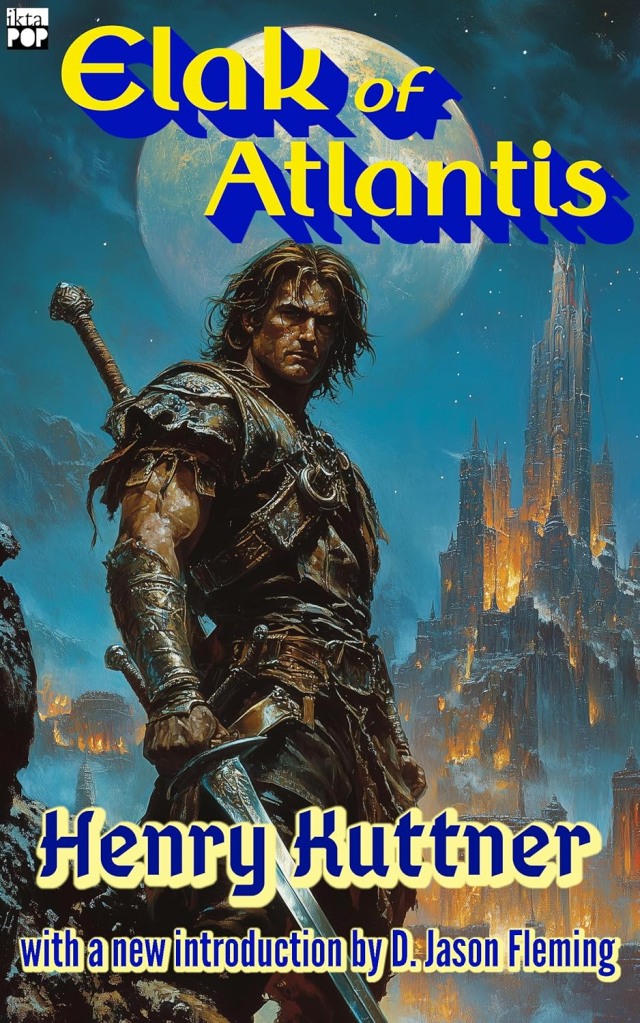
BY HENRY KUTNER, REVIVED BY D. JASON FLEMING: Elak of Atlantis (Annotated): The complete classic sword & sorcery tales

Join Elak on perilous quests across the ancient world! These four classic sword-and-sorcery tales by the masterful Henry Kuttner take us to realms of wonder and terror.

Across the mystical landscapes of lost Atlantis, Elak faces down ferocious monsters, cunning foes, and alien magical arts. With his unmatched skill with a sword and unyielding will to survive, Elak battles to protect the innocent and vanquish evil in this action-packed collection.

With their unique blend of swashbuckling adventure, fantastical world-building, and Lovecraftian horror, Kuttner’s Elak tales have captivated fans of fantasy and science fiction for generations.

  • This iktaPOP Media edition includes a new introduction giving the stories genre and historical context.

FROM JOHN BAILEY: The Fourteen Moons of Judgment (The Detective Stories)


A luxury sightseeing cruise among the fourteen major moons of Jupiter was meant to be the trip of a lifetime—genteel, elegant, and perfectly safe. The Celestial Swan, staffed entirely by flawless humanoid robots, promises its passengers refinement, comfort, and uninterrupted travel through the most spectacular vistas of the Jovian system.
But when the voyage begins, so does the terror.

Fourteen passengers—some respectable, some hiding secrets—soon discover that someone on board intends to judge them one by one. “Accidents” claim the first victims. A sudden illness takes another. Each death echoes a cryptic line from a chilling poem mysteriously delivered to the passengers before launch… a poem that predicts all fourteen fates.

Only two among them are truly innocent:

– A reserved young engineer searching for a quiet holiday
– A disciplined archivist escaping a life of burdens

Drawn together as suspicion spreads, they must navigate fear, mistrust, and the tightening pattern of deaths. With the robots unable to deviate from their programmed itinerary and the ship sealed in unstoppable transit, the passengers have no escape—and the killer has no reason to rush.

Survival will depend on uncovering the truth behind each past sin, deciphering the poem’s final lines, and facing the mastermind who hides behind a mask of civility.
A tale of refined suspense, subtle romance, and classic mystery inspired by the magnificent backdrop of Jupiter’s moons.

FROM HOLLY CHISM: Holidays and Holy Days (Modern Gods)

Hera was hard at work in her counseling office when her clients started cancelling for Thanksgiving travel. She…hadn’t realized that a) that was coming up, or b) what it actually about…until she did a little research and decided to celebrate. In the process, she learns about Christmas coming, and decides that it’s high time somebody threw Christ a birthday party.

Of course, nothing goes as planned, but when does it ever?

FROM LEIGH KIMMEL: The Ghosts of Christmases Past

These are troubled times. The Flannigan Administration’s hostility to clones has reached a boiling point, resulting in the Expulsions. All of NASA’s astronaut clones have been sent to lunar exile in Shepardsport.

Christmas is approaching, and Brenda Redmond is helping put on a musical adaptation of A Christmas Carol. But the three ghosts who visit Scrooge in the classic Charles Dickens story aren’t the only ghosts haunting the corridors of Shepardsport.

Even as Brenda is trying to get her young players ready, she must also track down the source of the strange visions that are coming unbidden to the settlement’s inhabitants.

A novelette of the Grissom Timeline.

FROM DALE COZORT: Through the Wild Gate

Robinette Thornburg, the half-human daughter of ultra-rich Robert Thornburg, thought she was fully human, just weird, for the first twenty-one years of her life. She went to expensive private schools, then Harvard. On her twenty-first birthday, she learned that she was half Mangi, the result of an encounter between her father and a primitive near-human woman from the Wild, an alternate reality North America where primitive humans arrived half a million years ago, but no modern humans ever did.

That was the first she had heard of Mangi or the Wild, closely held secrets of the wealthy families who control Gates to it, but she finds out far more than she wants to about the Wild when mysterious enemies kidnap her and leave her to die in the Wild, naked and weaponless.

Robinette nearly starves before finding her way back to our world through an early, uncontrolled Gate. She vows revenge, but on who? She teams up with Eric Carter, a down on his luck private eye and former bodyguard to her father. The two try to figure out who kidnapped Robinette and why, a quest that takes them through the decadent world of the Gate families, the only law in the Wild. It also takes them back to the Wild and then to a final confrontation with, their lives and the fate of the Wild at stake.

FROM FRANK LOPINTO: The World Before

Twenty thousand years ago on Earth, a cosmic entity infected a highly advanced cooperative civilization, with a neurological virus. This mind-virus brought that civilization to an end, but the virus remained, feeding on the survivors. Today, one half of an ancient artifact is rediscovered that if made whole, could end the infection that still grips Earth. But the virus itself opposes any such effort. Rather vigorously. The race is on through the ancient Southwest landscape to recover the artifact that is yet unclaimed. If these two artifacts can be brought together, it will either be used to save human civilization, or destroy the Earth, and everything on it for good.

FROM ANNA FERREIRA: Christmas at Blackheath

Agnes Rawlins would never dream of showing a melancholy face to her brother’s guests. She may be a spinster, and treated little better than any common housekeeper, but she is responsible for bringing Christmas cheer into the dark and rambling Blackheath Manor, and she does not shirk her duty, even when she has little reason to celebrate.

William Marlowe, Viscount Claridge, has reluctantly accepted an invitation to spend the Christmas season at Blackheath. It’s not his first choice- how anyone could wish to spend time in the gloomy manor house is beyond him- but when he meets the kind and gentle lady of the house, he finds that Christmas at Blackheath might not be so bad after all.

FROM SARAH A. HOYT BOOKS ON SALE FOR 99c

Here Be Dragons: A collection of short stories (Sarah A. Hoyt’s Short Story Collections)

A collection of short stories by Award-Winning Author Sarah A. Hoyt. From dark worlds ruled by vampires to magical high schools, from future worlds where superhumans face all-too-human struggles—this collection showcases Hoyt’s signature blend of high-concept adventure and deeply human drama. Her characters face impossible odds in worlds both strange and familiar, yet they never surrender. With vivid storytelling that has earned her recognition in Analog, Asimov’s, and Weird Tales, Hoyt delivers fiction that is as emotionally resonant as it is imaginative. Angel in Flight is set in Sarah Hoyt’s popular Darkship series.

The collection contains the stories: It Came Upon A Midnight Clear, First Blood, Created He Them, A Grain Of Salt, Shepherds and Wolves, Blood Ransom, The Price Of Gold, Around the Bend, An Answer From The North, Heart’s Fire, Whom The Gods Love, Angel In Flight, Dragons—as well as an introduction by fantasy writer Cedar Sanderson.

Deep Pink

Like all Private Detectives, Seamus Lebanon [Leb] Magis has often been told to go to Hell. He just never thought he’d actually have to go. But when an old client asks him to investigate why Death Metal bands are dressing in pink – with butterfly mustache clips – and singing about puppies and kittens in a bad imitation of K-pop bands, Leb knows there’s something foul in the realm of music. When the something grows to include the woman he fell in love with in kindergarten and a missing six-year-old girl, Leb climbs into his battered Suburban and like a knight of old goes forth to do battles with the legions of Hell. This is when things become insane…. Or perhaps in the interest of truth we should say more insane.

THESE HOLIDAYS FOR ALL OF YOUR SHARP POINTY NEEDS, OR RETRO MEDIEVAL STUFF, CONSIDER THE SHARP-POINTY-DAUGHTER-IN-LAW’S SHOP:

Morrigan’s Mercantile!

AS FOR YOUR GAMING FIGURINES, THROW SOME MONEY AT:

Murphic Industries!

AND FOR THE DISTASTEFUL BUSINESS OF GETTING YOURSELF AWAKE, CONSIDER THE UNUSUALLY TASTY AND EFFECTIVE OPTION OF:

King Harv’s Coffee! -WHERE EVERYTHING IS ON SALE RIGHT NOW

So what’s a vignette? You might know them as flash fiction, or even just sketches. We will provide a prompt each Sunday that you can use directly (including it in your work) or just as an inspiration. You, in turn, will write about 50 words (yes, we are going for short shorts! Not even a Drabble 100 words, just half that!). Then post it! For an additional challenge, you can aim to make it exactly 50 words, if you like.

We recommend that if you have an original vignette, you post that as a new reply. If you are commenting on someone’s vignette, then post that as a reply to the vignette. Comments — this is writing practice, so comments should be aimed at helping someone be a better writer, not at crushing them. And since these are likely to be drafts, don’t jump up and down too hard on typos and grammar.

If you have questions, feel free to ask.

Your writing prompt this week is: WRIST

Trouble In Between

This is not an extended whine. I mean, it might sound a bit whiney, but it’s really not. Things are actually on the way to getting better. Also — also — it’s relevant for the world at large, so bear with me.

About a month ago, having had an actual allergy test — long story, but I had one in Denver, where they assured me I wasn’t allergic to anything. Like the audiologist that (also in Denver) assured me I wasn’t deaf and had perfect hearing, it’s a cool story, but reality disagrees — I got told that I was allergic — among other things — to cats.

You could have knocked me down with a feather. No, seriously, you could knock me down with a feather. I’m very allergic to feathers. But I already knew that. But CATS?

To explain, I was born in paternal grandmother’s house. A house that contained (okay, the yard did, but I lived in the yard) a variable number of chickens and a minimum of seventeen cats. (At one point it had 32. I know. We counted.) Now before you think grandma was a hoarder, the truth is that she was soft touch. The neighborhood drowned newborn kittens. Or, you know, threw them over grandma’s wall at 8 to 10 weeks of age, because everyone knew she’d look after them. And they weren’t indoor only, but indoor/outdoor. And we had space for them to roam. It’s just that there were a lot of them.

As a lonely kid whose brother and cousins were all a minimum of almost-ten-years older, I played mostly with cats. In fact, I thought I was a cat till I was six. Actually it’s more complicated than that. I thought cats would grow up to be kids.

One of my earliest memories is of napping in winter in grandad’s armchair by the wood stove covered in cats.

So… I’d figured out, looking back that I was always deathly allergic to feathers. How allergic? Well, if we forget to check the pillows in a hotel room and they’re feather, I will start developing all signs of pneumonia within a few hours. If I actually spend the night in a room with feathers — happened once, because the hotel decided feather-free didn’t apply to… the eiderdown — the pneumonia-like “illness” will last for a couple of weeks.

This explains why until we moved from grandma’s house when I was almost 7 I had severe respiratory issues that often resulted in midnight drives to the hospital for the oxygen tent. And why I managed to have TB without ANYONE NOTICING against the background issues. Of course this was the late sixties, so when we moved and the issues mitigated almost completely, I was told that I’d “grown out of it.” But really, it was the chickens.

But…. CATS?

Yes, actually, tracking the times the cats have been outdoor-only for various reasons (and because there was shelter for them) it makes sense, as my most productive years were in Manitou Springs, while the cats were outside, (though it’s also where my thyroid first went wonky, but that was altitude, likely). Still… cats?

I was so dazed when given the price for the desensitization treatment — which might or might not work, but they think it will — (2.5k if you’re interested) — that I told them I’d discuss it with my husband and get back to them. So I got out, I called Dan to tell him I was going by the coffee shop first (it was very cold, and I was very cold). I told him the test results and the price. He told me to march my little behind in there and sign for the treatment because we were NOT giving up Indy and the girls, and to give up Havey who is (we actually checked and did the math) almost 19 and dying by inches would be barbaric.

So I went and signed. And have started the treatment.

Now, I had been told there might be a little swelling or itch or a bunch of other symptoms. Well, there have been some of those, including cough and itchy eyes. BUT the worst? TIREDNESS. It’s like being hit with the hammer of tiredness every time. I mean, the level of tiredness like years ago when I was awake for 48 hours on a trip back from Portugal that turned into a fun tour of European and US airports due to a volcano eruption combined with spicy weather.

Anyway…. This means that I do very strange stuff when I think I’m awake, but really am not. This last happened when I ill before surgery ten years ago. I’d think I was awake, and do my normal stuff, except a lot of links at instapundit would miss the link, or books would have a link for something completely different. Also I’d wake up in the morning with no memory of having gone to bed, to find out my computer was mid-posting to instapundit (or my blog) and I’d stopped mid-process (like everything was set up, but I didn’t hit “publish”) and gone to bed. When this happened with instapundit, my phone would also blow up overnight with questions from friends asking what had happened at three or four in the morning, and THE PHONE PINGS DIDN’T WAKE ME UP.

Well, these treatments are putting me right there. I’m mostly — kind of — awake during the day, though everything is super slow. BUT after dinner, I might function very well — limbic system memory, I swear — or … do very strange stuff.

…. which is why except for once this week I didn’t manage to schedule the post in the evening for the morning.

On the good side I’m sleeping really well.

Anyway, if you send me links, or want any kind of input from me in the evening, you might get what you want. Or you might get an answer that’s not precisely from me.

To clarify: I’ve always been one of those people that if talked to while asleep can have a complete conversation she doesn’t remember at all. We have found this extends to typed replies. My husband, after a couple of alarming experiences realized that those answers are not in fact the most truthful straight from the subconscious. Or rather, because they are straight from the subconscious, in fact, they are sometimes if I’m immersed in a book, OBVIOUSLY from the persona of one of my characters. So if you ping me to ask for advice on anything (usually self publishing or promotion — the last being hilarious because do I look like I know? –) you might get a sensible answer. Or you might get Tom or Kyrie, Athena or Kit or Luce or, Heaven forbid, Nat, or Skip or — Heaven have mercy on you, really — Brundar or Eerlen. Now, I do realize this can be wildly amusing, but please, don’t assume it’s sane or even from me, really.

At any rate, I hope the treatments work, but it occurs to me this is a great analogy for the time we’re going through right now.

Yes, what can’t go on won’t, but what can go on is…. variable.

Look, one of the reasons I say that the kind of socialist bs the autopen tried to impose couldn’t go on here is that we’re not used to privations, not really. FDR got as far as he did because he was dealing with a different American people, where most were used to living rough on the edge of survival. (And we were way better off than the rest of the world, except the rich. Think about it.) We’re not. Americans have a far lower tolerance for bullshit that makes their lives worse than say Europeans do. Which is a GOOD thing, whatever you think, because the bullshit Europeans have put up with in the name of “climate change” is the kind of barbaric crap that unmakes civilization.

But we’re used to a lot of encroachment. Like I’m used to always having an immune or autoimmune flare up of any kind, to the point that the test I call “tick tack Toe with allergens on my back” apparently made my entire back light up like a Christmas tree, but I didn’t itch. Not consciously. Because itching is more or less my default condition, so I’m used to suppressing the sensation.

In the same way having gotten used to nonsense like the EPA making it practically impossible to build, hire, educate, or do anything worthwhile in this land of the once free, we don’t notice a lot of encroachment. Until it reaches the level it’s making everything stop with a post half on the computer, and sends you to a bed you have no memory of getting into. Metaphorically speaking. And then you realize something is very very wrong.

That is the level we reached under the autopen. I don’t know about you guys, but last year around this time we were trying to figure out how long we could hold on as everything cost more every month. US. And we’re not unemployed, nor do we have kids in the house. (And to be fair, we don’t EAT that much. Or drive that much.)

Now… we have a little more room. Are things all fixed? No. Some might be impossible to fix in a generation. BUT I’m not in utter panic, anymore.

But in the macro sight of things, we are still all in a panic. Yes, the left probably more justifiably, but all of us really.

You keep hearing how, liberty-wise or prosperity-wise we’re at our lowest ebb. That’s bullshit. We were much less free in the fifties. And we were far poorer (and with less prospect of improvement) in the seventies.

It feels like now is worse for two reasons:

We’ve lost more trust in our institutions. This is actually largely a GOOD thing as “government by experts” has been a florid disaster for at least a hundred years. The idea that “people who know a lot” can or should, and have the authority to design life for the rest of us is evil and needs to die with a stake through the heart. “Largely” because there are institutions we need. And until we replace them this will entail some jeopardy. (More or less than from their being beyond corrupted? Eh. Six of one and green jello volcano penguin of the other.)

Also we are now more aware of how wrong things are and how encroaching “authority” from above has been. This is because we have freedom of communications for the first time since the early 20th century, when all our press and mass-industrial-information-entertainment complex because captured by the left and turned into a megaphone of their viewpoints. Turns out if you’re the only one with the megaphone you can convince people they’re free even while they’re in shackles, and the chain is getting shorter. Which is exactly what happened. Now the chain is loosened we hear it rattle and realize how close we came to being wholly bound up.

Hence, right now FEELS the worst, even though it isn’t.

I recently refused to amplify an article from a friend who was convinced that “American culture” is gone and irretrievable and now we’re something else, and he had flopped on the ground and given up and why wouldn’t we?

Well, because. American culture will change, I’ll give you that. But I’ll lay you a small bet (laying you a large bet wouldn’t be credible) that the basics of individualism and rule of law are about to come back harder than ever, together with a tendency to give the middle finger to authority that tries to reach too far. Because that’s the way things are headed.

And despite the influx of incomers … My guess is most who came for the benes will leave as the goodies are getting withdrawn little by little. Heck, even those who came to work are likely to leave if they can’t draw welfare, because this is a hard country to make it in with no skills if you don’t get plentiful government support.

Those who stay…. won’t make America less America than anyone has these 250 years. Why? Because we tend to attract people who are willing to leave everything behind, and give up on all support systems, to be of us. Trust me. I see one in the mirror every morning. (And it’s getting disturbing as the years go by, let me tell you.)

We tend to be the people who don’t want to be ordered about, and are willing to take inconvenience and hardship in exchange for minimal and rational authority.

Chances are America, while whole, will always be America.

We’re just in the space in between where things look worse or feel worse because they’re changing so fast and some of the intervening changes get worse before they get better.

Like having a bolus of everything you’re allergic to injected into your arms, it has some…. less than desirable effects. And it will get worse before it gets better.

But though nothing is certain, I’ve been assured* there’s a good chance things get better than they’ve ever been at the end of this process.

Yes, for my allergies too. But mostly for our country.

Eschew the blackpill. All the blackpill does is make you give up and make the bad inevitable. Not only is it NOT inevitable, right now, but the forces of oppression are being hit on the nose the world over and particularly here. (As it should be.) No, not everything is perfect. Battles are messy and there are a lot of small loses on the way to victory.

STAND YOUR GROUND.

It’s icky and weird, and sometimes we’re zombified, but the end we win, they lose. BE NOT AFRAID.

*It was either a prophetic vision or my subconscious is far smarter than I since I got this the day before the lockdowns which we didn’t know were coming. You believe whichever you want. I’m not your mother. I know what I believe, though.

2026 PROMETHEUS HALL OF FAME AWARD FINALISTS ANNOUNCED FIVE NOVELS BY BLISH, HUXLEY, LEWIS, ROBERTS AND STROSS HONORED

*Sharing this because might be of interest to people here, but also so I have a location to share it at instapundit from — the blog post is being written, and it’ll explain SOME of what’s going on. It’s not a state of the writer, but it is a state of the writer… – SAH*

The Libertarian Futurist Society has selected finalists for the 2026 Prometheus Hall of Fame Award for Best Classic Fiction.

This year’s five finalists – first published between 1932 and 2003 – are novels by James Blish (The Star Dwellers), C.S. Lewis (That Hideous Strength), Aldous Huxley (Brave New World), Adam Roberts (Salt) and Charles Stross (Singularity Sky).

Here are capsule descriptions of each work, listed in alphabetical order by author:

The Star Dwellers, a 1961 novel (Faber and Faber; Avon Books) by James Blish, revolves around a fraught potential conflict between humans and an ancient species of energy beings born inside stars. A young space cadet serving on a small scout starship finds himself alone and at a pivotal moment, prompting him to forge a friendship with one of the youngest Angels. Their efforts at communication and bargaining result in a deal that opens the door to wider negotiations toward a historic treaty of cooperation and peaceful co-existence. Powerfully but simply dramatizing how voluntary exchanges and free trade benefit both parties, Blish’s idealistic SF juvenile novel illuminates the virtues of consent and contract – two of the most fundamental ideas at the foundation of both libertarianism and classical liberalism – as the civilized alternatives to conflict and war.

Brave New World,a 1932 novel (Chatto & Windus) by Aldous Huxley, is a dystopian classic offering a still-timely cautionary tale of collectivist soft tyranny under seemingly benevolent world government and technocratic central planning. Critiquing his era’s rise of collectivism and Progressive infatuation with the racist pseudo-science of eugenics, Huxley warned about behavioral/biochemical conditioning, propaganda, censorship and manipulation of artificial wombs limiting intelligence and initiative to create and control different castes. At a time when the intellectual and artistic elite saw most forms of authoritarian collectivism as the inevitable and positive wave of the future, Huxley foresaw the dark side of utopia. The novel explicitly dramatizes how such trends deny individuality, liberty, reason, passion, romantic love, the family, history, literature (including Shakespeare, which inspired the novel’s title) and other things that enrich distinctly human life.

That Hideous Strength, a 1945 novel (Scribner) by C.S. Lewis, is the climax of the Christian libertarian’s Space Trilogy. Set mostly on Earth, Lewis’ dystopian and metaphysical vision dramatizes warring ideologies of good and evil, freedom and tyranny. The story revolves around a sociologist and his wife who discover a totalitarian conspiracy and diabolical powers scheming to control humanity in the guise of a progressive-left, Nazi-like organization working for a centrally planned pseudo-scientific society literally hell-bent to seize power. Evoking a police state in the takeover of a local village and warning about the dangers of bureaucracy, Lewis seems most prophetic today in his cautions about the therapeutic state and rising ideology of scientism (science not as the value-free pursuit of truth, but as elitist justification for social control).

Salt, a 2000 novel (Gallancz Limited) by Adam Roberts, dramatizes misunderstandings and growing conflicts between an  anarchist community and its statist neighbor. Set on a harsh desert-like colony world, Robert’s impressive first novel contrasts radically different conceptions of liberty. Evoking Ursula K. Le Guin’s Prometheus-winning The Dispossessed in its depiction of alternative dystopian/utopian societies, Roberts’ cautionary science fiction story underscores how pro-freedom rhetoric can rationalize transgressions and how skewed ideals and good intentions can lead people astray. Told in alternating chapters by the two societies’ biased leaders, this libertarian tragedy poignantly reveals how cross-cultural misunderstandings can spark the horrors of war. Although each society is flawed and falls short of respecting the individual rights, self-ownership and non-aggression principles of modern libertarianism, Salt provokes fresh thinking about the true meaning of freedom.

Singularity Sky,a 2003 novel (Ace Books) by Charles Stross, dramatizes the ethics and greater efficacy of freedom in an interstellar 25th century as new technologies trigger radical transformation – strikingly beginning with advanced aliens dropping cell phones from the sky to grant any and all wishes. Blending space opera with ingenious SF concepts (such as artificial intelligence, bioengineering, self-replicating information networks and time travel via faster-than-light starships), the kaleidoscopic saga explores the disruptive impact on humanity as various political-economic systems with varying degrees of freedom come into contact. Stross weaves in pro-liberty and anti-war insights as an observant man and woman, representing Earth’s more libertarian culture and anarcho-capitalist economy based on private contracts, interact with a repressive and reactionary colony, its secret police and its military fleet.

For full-length reviews of the finalists, which highlight how they fit the distinctive dual focus of the Prometheus Awards on both liberty and literary quality, visit the Prometheus Blog at lfs.org/blog/  So far, reviews have been posted of The Star Dwellers,Brave New Worldand Singularity Sky,with reviews planned by early 2026 for Salt and That Hideous Strength.
THE OTHER NOMINEES
In addition to the five finalists, the Prometheus Hall of Fame Finalist Judging Committee, chaired by LFS President William  H. Stoddard, considered four other nominees:Flow My Tears, the Policeman Said, a 1974 novel by Philip K. Dick; “The Kindly Isle,” a 1984 story by Frederik Pohl; Babylon 5, a 1994-1998 TV series created by writer-director J. Michael Straczynski; and Between the Rivers, a 1998 novel by Harry Turtledove.

The final vote will take place in mid-2026. All Libertarian Futurist Society members are eligible to vote. The award will be presented online, via Zoom and open to the general public, on a date to be announced (most likely on a weekend afternoon in mid- to late August.)

Eligible for nomination if first published, filmed, broadcast, staged or recorded at least 20 years ago, Hall of Fame nominees may be in any narrative or dramatic form, including stories or other prose fiction, stage plays, film, television, other video, graphic novels, song lyrics, or epic or narrative verse; they must explore themes relevant to libertarianism and must be science fiction, fantasy, or related fantastical and speculative genres.

THE FOCUS OF THE PROMETHEUS AWARDS
First presented in 1979 (for Best Novel) and presented annually since 1982, the Prometheus Awards have recognized outstanding works of fantastical fiction that dramatize the perennial conflict between liberty and power, favor voluntary cooperation over legalized or criminal coercion, expose abuses and excesses of obtrusive government, critique or satirize authoritarian ideas, or champion individual rights and freedoms as the mutually respectful foundation for peace, prosperity, progress, justice, tolerance, civility, and civilization itself.

The awards include gold coins and plaques for the winners for Best Novel, Best Classic Fiction (Hall of Fame), and occasional Special Awards.

The Prometheus Award is one of the most enduring awards after the Nebula and Hugo awards, and one of the oldest fan-based awards currently in sf.

HOW TO NOMINATE OR SUBMIT WORKS

Nominations for the next cycle of the Hall of Fame Award can be submitted to committee chair William H. Stoddard (halloffame@lfs.org) at any time up to Sept. 30, 2026. All LFS members have the right to nominate eligible works, while outside publishers and authors are welcome to informally submit eligible works for consideration by LFS members and judges.

The LFS welcomes new members who are interested in speculative fiction and the future of freedom. More information is available at our website, lfs.org and on the Prometheus blog (lfs.org/blog).